Gardening Services in Brixton

Gardening Services in Brixton can cover practical, tidy work that keeps outdoor spaces manageable, attractive and ready for everyday use. Our focus is on the kind of garden care people actually need: lawn mowing, hedge trimming, garden clearance, tree lopping and removal, decking-related work, and broader landscape gardening when a space needs a more substantial refresh. We aim to present the options clearly so you can decide what suits your plot, your schedule and the condition of the garden.
Whether a garden needs regular upkeep or a one-off reset, the service is best approached in stages. Some customers want a simple maintenance visit, while others need help with overgrowth, dropped branches, old timber, or areas that have become difficult to use. You can start with the main job and then add related tasks where they make sense, rather than trying to solve everything at once. If you are comparing options, our services overview gives a useful starting point.
For many homes and small premises, the most helpful work begins with visible priorities: cutting back access routes, improving the lawn, and removing waste so the space can be used properly again. From there, we can look at the finer details such as shaping edges, levelling awkward areas, or planning a more considered layout. If you are ready to make progress, get in touch to discuss the work.
Regular Garden Maintenance
Garden maintenance suits outdoor areas that need attention at sensible intervals rather than a single dramatic overhaul. In Brixton, that may include grass cutting, weeding, tidying borders, light pruning and keeping growth under control so the garden remains usable. The emphasis is on practical care, with the work shaped around the size of the site, the season and the condition of the planting. A maintenance plan can help prevent minor issues from becoming larger jobs.
Garden maintenance is often the best fit where the layout already works but needs steady attention. Some gardens only need a straightforward visit; others require more time spent on neglected corners, uneven growth or mixed planting that has become difficult to keep in shape. We can adapt the task list so that the work stays focused on what will actually improve the space, rather than adding unnecessary extras.
When preparing an enquiry, it helps to note the main features of the garden, any problem areas and whether the job is for one visit or ongoing care. If you already know that the lawn, hedges and access routes are the key concerns, mention that at the outset. A clear description makes it easier to judge the right scope and prepare a sensible quotation without building in unnecessary work.
Lawn Mowing and Grass Care

Lawns need different treatment depending on the grass length, the shape of the plot and whether the edges have been neglected. Lawn mowing is not only about a neat finish; it also helps keep paths, patios and planting beds from being swallowed by encroaching growth. In a busy area like Brixton, many gardens benefit from straightforward mowing work that restores a clean line and makes the space easier to maintain afterwards.
Our lawn mowing service suits gardens where the grass is the main feature and the customer wants a tidy, even result. On some sites, the work may involve awkward corners, narrow runs or grass that has become too long for a quick pass. In those cases, the approach needs to be measured and realistic. A good cut should leave the area looking controlled, not stressed, scalped or left with uneven patches.
It is useful to mention access, gate widths and whether the lawn is front, back or shared. If you are comparing regular care with a one-off tidy, say so clearly. Clear information on the state of the grass and the frequency you want makes it easier to judge the right level of work. If the grass has grown too long, the cutting method may need more time than a standard maintenance visit.
Hedge Trimming and Shaping
Hedges can define boundaries, add privacy and soften the look of a garden, but they need proper cutting to stay healthy in appearance and proportion. Hedge trimming works best when the shape is considered rather than rushed. That may mean levelling the top, reducing side spread, or restoring a hedge that has become too wide for the available space. Trimming can also improve light and visibility where growth has started to crowd paths or windows.
Hedge trimming is useful when a hedge needs a controlled finish rather than a hard reduction. Different plants respond differently to cutting, so the work should be matched to the hedge type and the desired result. Some customers want a formal line; others simply need the hedge kept within bounds. The right approach depends on whether the priority is appearance, access, or stopping the plant from encroaching on other parts of the garden.
Useful details include approximate height, length, and whether any side faces a neighbour’s property, fencing or public pavement. If there are areas that cannot be reached easily, say that before the visit is arranged. For larger or particularly dense hedges, the amount of time needed can change significantly. A brief note about the hedge’s condition is often enough to shape the quotation request into something accurate.
Garden Clearance for Overgrown Spaces
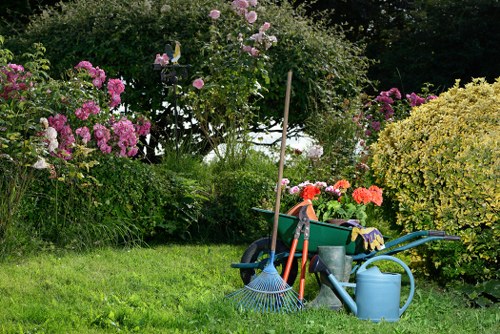
Garden clearance is the practical choice when an outdoor space has become cluttered, overgrown or difficult to use. It can involve removing waste vegetation, cutting back unwanted growth, clearing leaves and loose debris, and making the area easier to inspect and manage. In some cases, the aim is to prepare the garden for later maintenance; in others, it is simply to reclaim space that has been left to deteriorate over time.
Garden clearance is particularly useful where there are mixed materials to deal with, not just plants. Old pots, broken trellis, prunings and accumulated organic waste can all make a garden feel far more untidy than its size suggests. A careful clearance focuses on what is present, what should stay, and what can be removed without damaging the parts of the garden that are still worth keeping. That approach is especially important where planting beds are hidden beneath heavy growth.
If the space contains stubborn access points, damp corners, hidden waste or large volumes of cut material, it is worth saying so from the start. We can then judge the level of work more accurately and avoid unnecessary assumptions. For many customers, the best first step is simply to state what the garden looks like now and what outcome is wanted. A clear description saves time and helps the quotation reflect the real task.
Landscape Gardening and Garden Improvements
Landscape gardening is the service to consider when the aim is more than tidying and cutting. It may involve improving the structure of the garden, rethinking beds and borders, refreshing surfaces, or bringing a more coherent shape to an outdoor area that feels awkward or unfinished. The work can be modest or substantial depending on the site, but the common thread is a better planned result rather than a purely maintenance-based visit.
Landscape gardening is well suited to customers who want their garden to function better as a whole. That could mean clearer routes, more purposeful planting areas, or a tidier relationship between lawn, hardstanding and borders. Where the ground is uneven, the layout cluttered, or the usable space limited, careful planning matters. The exact scope should match the condition of the garden and the improvements that will genuinely make a difference.
Pricing and quotes can be discussed once the main work has been identified, especially if the job combines clearing, trimming and more detailed improvement work. It is helpful to state whether you want a single area refreshed or the whole garden reviewed. If you are unsure how to break the job down, a simple outline of the changes you want is enough to begin the conversation.
Decking and Outdoor Surface Work

Decking can give a garden a more usable level surface, but it also needs sensible attention if it is to sit well within the rest of the space. Decking-related work may form part of a wider garden improvement project, particularly where the existing layout leaves uneven transitions between patio, lawn and planting areas. The point is not just appearance; it is how the surface connects to the way the garden is actually used.
Decking services are most relevant when a customer wants a defined area for seating, access or a cleaner boundary between different parts of the garden. The work may need to take account of gradients, edges and the practical relationship between timber features and surrounding planting. It is sensible to treat decking as part of the whole layout, rather than as an isolated feature that ignores drainage, movement or nearby garden work.
If decking is being considered alongside clearance or landscaping, it helps to say which element comes first and what must be retained. Some projects start with removal or tidying around an old structure; others begin with a new layout idea. Either way, the more clearly the sequence is described, the easier it is to identify the right scope and prepare an accurate quotation.
Tree Lopping and Removal
Tree lopping and removal are more specialised tasks within garden services, and they are usually considered when growth has become excessive, awkward or no longer suitable for the space. The work can help reduce overhanging branches, improve access, or remove a tree that is interfering with the rest of the garden. It is important that the task is assessed carefully, because the scale of pruning or removal depends on the tree’s size, condition and position.
Tree lopping and removal may be appropriate where branches are crowding the garden, affecting light, or making routine maintenance harder. In some cases, it is enough to reduce particular sections; in others, a full removal is the better option. The right outcome depends on the tree itself and on what the customer wants the space to become afterwards. That is why a clear description of the problem is more useful than a vague request for cutting back.
If you are enquiring about a tree, it helps to say whether the concern is height, spread, dead wood or interference with other features. Mention nearby structures, fencing or narrow access only if they are relevant to the task. The more plainly the issue is set out, the easier it is to judge whether pruning, reduction or removal is the sensible route.
How to Plan a Useful Quotation

Good quotations start with practical information. A short note about the size of the garden, the main tasks you want done and the general condition of the space is usually enough to begin. If there are several items to address, list them in priority order. That helps keep the enquiry focused on the work that matters most and avoids confusion about what is included. A concise message can be far more helpful than a long description that buries the main point.
It is often useful to think in terms of outcomes: do you want the garden made tidy, restored to regular maintenance, or reshaped as part of a wider improvement? If the job includes waste from clearance, trimmed hedge cuttings or branches from a tree task, say so. The more clearly the scope is defined, the easier it is to compare options and agree a quotation that reflects the work rather than a guess. Our pricing and quotes page gives a straightforward way to continue.
For those ready to move ahead, the simplest next step is to send the main details and ask for the right level of help. If you would like to talk through the work first, contact us and outline what needs doing. A brief, well-structured enquiry is usually the fastest way to move from interest to a practical plan.
About Brixton
Brixton is a district in south London within the London Borough of Lambeth, known for its strong cultural identity and long-standing role as a centre of trade, music and community life. Its history includes 19th-century urban expansion linked to the arrival of rail transport, which helped turn former fields and estates into dense streets of housing and commerce. Over time, Brixton became associated with markets, independent shops and a diverse population shaped by migration and changing patterns of city life. Brixton Market and the surrounding street network remain key reference points, with covered stalls and nearby retail streets contributing to the area’s character. Brixton Road forms a major route through the district, while the underground station and rail links connect it closely to central London. The area also contains notable examples of Victorian and later architecture, from terraces and civic buildings to post-war redevelopment. Nearby Brockwell Park provides one of the best-known open spaces in the wider locality, with mature planting, a walled garden and broad recreational lawns. The district has also been closely tied to live music, performance and nightlife, with venues and cultural spaces adding to its reputation as a lively urban centre. In recent decades, Brixton has seen continuing debate about heritage, change and local identity, with conservation concerns often sitting alongside new development and commercial adaptation. That mix of market life, transport access, distinctive streets and public green space gives the area a varied character that is recognisably urban, practical and historically layered.